English
  한국어
한국어  français
  Deutsch
  Español
  italiano
  русский
  português
  العربية
  Polska
In 2026, the promotional gifting landscape is undergoing a fundamental shift. Corporate buyers, hotel procurement managers, event planners, candle brands, restaurant groups, and wedding companies are increasingly asking a question that would have seemed unusual a decade ago: does this giveaway align with our sustainability commitments, or does it create plastic waste that contradicts our brand values? For the millions of promotional items distributed at events, placed on hotel room tables, included in gift bags, and handed out at brand activations every year, the answer to that question is reshaping which products get specified — and which get replaced.
The box of matches is emerging as one of the clearest winners in this sustainability-driven procurement shift. A custom wooden matchbox — made from natural wood matchsticks, paperboard packaging, and responsibly sourced materials — offers brands a compact, practical, visually expressive, and genuinely eco-conscious alternative to the disposable plastic lighter that has dominated promotional gifting for decades. For corporate buyers evaluating safety match box manufacturers for bulk promotional orders, the decision is not simply about finding the cheapest ignition product — it is about finding a customizable, FSC-certifiable, biodegradable promotional item that works as a brand touchpoint, supports CSR messaging, and creates a more positive environmental impression than a plastic lighter that may persist in the environment for hundreds of years. F-Zero Match Factory offers custom match boxes in different sizes and shapes, with DIY design options, cardboard paper choices, black or brown strike surface options, FSC certification, BSCI compliance, and EN1783 standard support — providing the customization flexibility and sustainability credentials that modern promotional procurement requires.
This guide covers the complete picture for corporate buyers, hotel procurement teams, event agencies, candle brands, and promotional gift distributors: why plastic lighters are losing ground in sustainable promotions, what makes a wooden matchbox a better promotional product, how FSC certification and responsible sourcing support CSR positioning, how to evaluate matchbox customization and safety quality, and what procurement and storage practices protect the investment in custom promotional matchboxes.
The commercial case for switching from plastic lighters to custom wooden matchboxes in promotional gifting starts with an honest assessment of why plastic lighters have become a liability for brands with sustainability commitments — and why the environmental profile of a disposable plastic lighter conflicts with the CSR and ESG messaging that modern brands want to communicate.
Plastic persistence in the environment is the most fundamental environmental problem with disposable plastic lighters as promotional items. The EPA notes that plastic pollution is persistent and may take 100 to 1,000 years or more to decompose depending on conditions — meaning that every plastic lighter distributed as a promotional item becomes a long-lived piece of plastic waste after its fuel is exhausted. For brands that have made public commitments to reducing plastic waste, distributing plastic lighters as promotional gifts creates a visible contradiction between stated values and actual purchasing decisions — a contradiction that sustainability-conscious consumers and corporate clients increasingly notice and comment on.
Limited branding surface and generic appearance is the commercial problem that makes plastic lighters a poor promotional investment even before the sustainability question is considered. A standard promotional lighter offers a small cylindrical surface for logo printing — limiting the visual impact of the brand message and making the product feel generic rather than premium. A custom wooden matchbox, by contrast, offers a full rectangular sleeve surface for artwork, photography, typography, and brand storytelling — creating a much more visually expressive and memorable brand touchpoint.
Misalignment with premium and lifestyle brand positioning is the brand perception problem that is driving the fastest adoption of custom matchboxes as plastic lighter replacements. Hotels, candle brands, restaurants, wedding planners, cigar lounges, and boutique lifestyle brands have brand identities built around natural materials, craftsmanship, warmth, and authenticity — values that a wooden matchbox communicates naturally and that a plastic lighter contradicts. For these brands, the promotional item is not just a functional giveaway — it is a physical expression of the brand's values and aesthetic, and the material it is made from communicates as much as the logo printed on it.
Understanding what a custom wooden matchbox is — and how its component design, customization options, and safety specifications determine its performance as a promotional product — is essential for procurement teams evaluating safety match box manufacturers for bulk promotional orders.
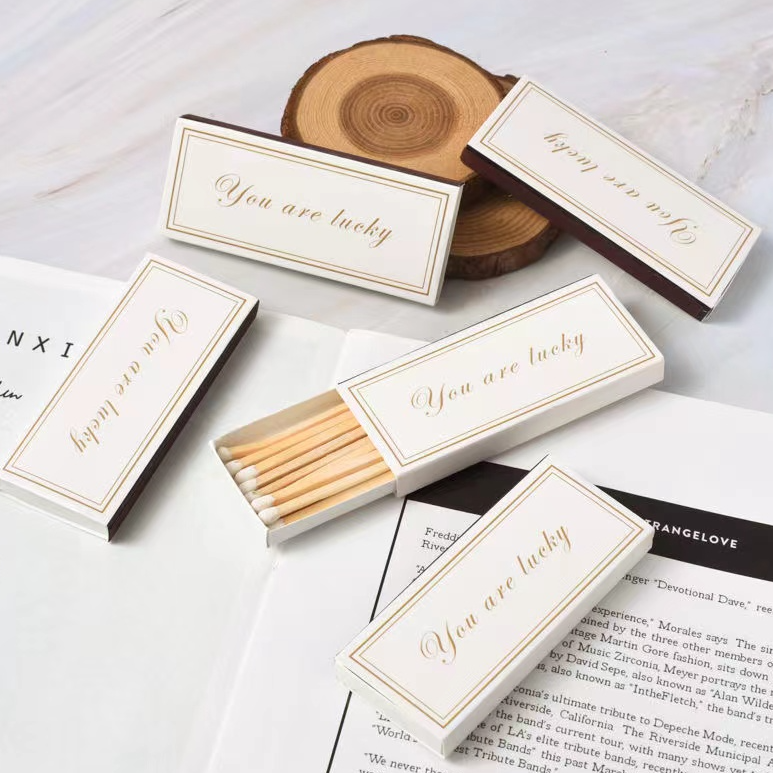
A box of matches is a small container holding wooden matchsticks with a safety striking surface — but for B2B promotional buyers, it is a customizable brand touchpoint that can be designed to express the brand's visual identity, communicate sustainability values, and create a memorable physical impression with every use. F-Zero's box of matches category includes custom match boxes, personalized match boxes, vintage matchboxes, and various stick lengths, with listed examples including 114×36×15 mm wedding match boxes with 100 mm sticks and 70×35×13 mm matchboxes with 65 mm sticks.
| Component | Function | B2B Customization Opportunity |
|---|---|---|
| Wooden match stick | Ignition material | Natural material supports eco-friendly brand messaging |
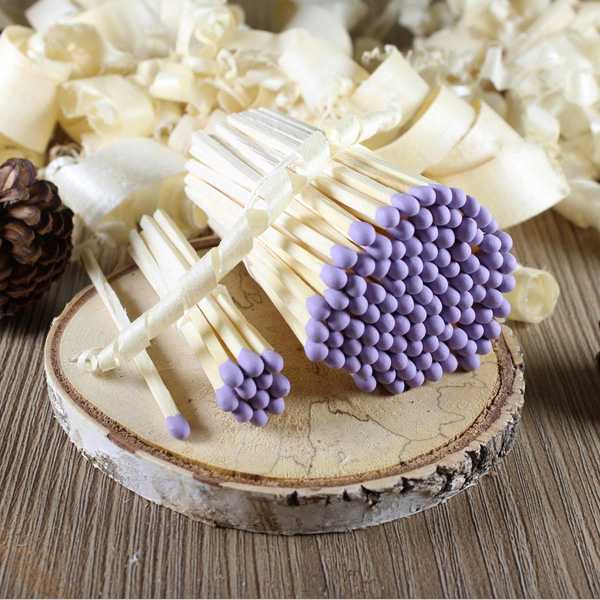
| Match head | Ignition tip | Customizable by color for brand, seasonal, or event themes |
| Inner tray | Holds matches | Supports smooth opening and product protection |
| Outer sleeve | Main branding surface | Full artwork, logo, color, pattern, QR code |
| Strike surface | Safety ignition area | Black or brown options for different design aesthetics |
| Paperboard box | Packaging structure | White, grey, red, kraft-style, or custom paper choices |
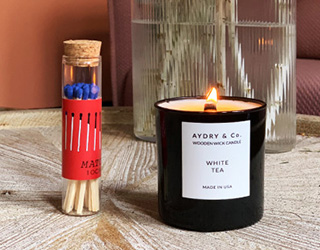
A branded wooden matchbox is small, useful, collectible, and visually expressive — and it has direct practical use in the brand environments where premium promotional items are most valued: hotel rooms where guests light candles or incense, restaurants where table candles need relighting, wedding receptions where guests take home a keepsake, cigar lounges where a quality match is preferred over a lighter, and lifestyle retail environments where the product itself communicates the brand's commitment to natural materials and thoughtful design.
The technical mechanism by which FSC certification, recycled paperboard, and responsible sourcing practices transform a simple box of matches into a credible biodegradable promotional item — and why these sustainability credentials are becoming procurement requirements rather than optional extras for CSR-focused buyers — is the core sustainability knowledge that procurement teams need to evaluate matchbox suppliers for eco-conscious promotional campaigns.
FSC — the Forest Stewardship Council — explains that its label provides assurance that wood and paper products come from responsible sources and meet strict environmental and social standards. For promotional buyers who need to demonstrate that their branded products support responsible forest management, FSC certification on the matchbox materials provides the third-party verification that makes the sustainability claim credible and auditable. F-Zero states that it has FSC certification, BSCI compliance, and EN1783 standard support, and that it uses responsibly sourced materials for eco-friendly and functional bulk matchboxes — providing the certification documentation that CSR-focused procurement teams require.
| Evaluation Factor | Wooden Box of Matches | Plastic Lighter |
|---|---|---|
| Primary material | Wood and paperboard — natural and renewable | Plastic, metal, and fuel — non-renewable |
| Environmental persistence | Wood and paper biodegrade naturally | Plastic may persist for 100 to 1,000 years |
| Eco-friendly perception | Strong — natural materials and responsible sourcing | Weak — plastic waste concern |
| Branding surface | Full rectangular sleeve — high visual impact | Small cylindrical body — limited visual impact |
| Customization depth | Size, artwork, head color, striker color, paper type | Usually logo print only |
| CSR alignment | Strong for natural, luxury, and sustainability brands | Conflicts with plastic-free and eco-conscious positioning |
| Disposal profile | Wood and paper-based — recyclable and biodegradable | Mixed plastic and metal — difficult to recycle |
| Premium brand fit | Excellent for hotels, candles, weddings, restaurants | Generic — limited premium positioning |
For CSR-focused buyers who need to communicate a complete sustainability story, the strongest matchbox specification combines: FSC-certified wood sourcing for the matchsticks, recycled or recyclable cardboard packaging for the box, paperboard sleeves instead of plastic wrapping, minimalist ink and kraft-style design options that minimize chemical use, and bulk packaging that reduces excessive retail packaging waste. This combination allows brands to make a credible, documented, and visually compelling sustainability claim that supports ESG reporting, CSR communications, and eco-conscious brand positioning.
The selection of the right safety match box manufacturer for a bulk promotional order requires systematic evaluation of customization capability, safety testing standards, production quality, and export experience — and an understanding of how design choices affect both the brand impact and the functional performance of the finished product.
| Custom Option | Brand Application |
|---|---|
| Box size | Match the occasion, price point, and distribution channel |
| Stick length | Short matches for candles; long matches for fireplaces or BBQ |
| Match head color | Brand colors, seasonal themes, wedding palettes |
| Box artwork | Full visual branding — photography, illustration, typography |
| Logo printing | Corporate, hospitality, event, or retail branding |
| Strike surface color | Black or brown for different design aesthetics |
| Cardboard color | White, grey, red, kraft-style, or custom paper |
| Quantity per box | Adjust perceived value and unit cost |
F-Zero states that custom match boxes are available in different sizes and shapes, the box color can be DIY designed, cardboard options include white, grey, red, and other papers, and its striker is free of white phosphorus — providing the customization range and safety specification that professional promotional buyers require.
A promotional matchbox that fails to strike reliably, arrives damaged, or creates a safety incident damages the brand it was designed to promote. Buyers should verify: safety match formula with white-phosphorus-free striker, strike reliability and friction testing, moisture resistance of the match heads and striker surface, match head consistency across the batch, box gluing quality and structural integrity, packaging stability during export shipping, and compliance documentation for the destination market. F-Zero states that its bulk matchboxes undergo rigorous safety and friction testing and that it controls the full production line to meet international safety standards — providing the quality assurance that protects the buyer's brand reputation.
Custom matchboxes deliver the most brand value for: hotels and resorts where a branded matchbox on the room table creates a premium brand impression, candle brands where a matching custom matchbox completes the product experience, wedding planners where personalized matchboxes serve as keepsake favors, restaurants and bars where a branded matchbox at the table reinforces the dining experience, cigar lounges where a quality match is preferred over a lighter, and corporate CSR campaigns where a biodegradable promotional item demonstrates the brand's environmental commitment.

Procuring the right custom matchbox for a promotional campaign requires systematic pre-order confirmation of design requirements, safety specifications, and logistics requirements — and proper storage practices that protect the product quality through distribution.
Before requesting a quotation from safety match box manufacturers, prepare and confirm the following:
Confirm the product type — small box, long box, matchbook, jar matches, or custom box — based on the brand application and distribution channel
Confirm the box dimensions and match stick length — verify that the selected size is appropriate for the intended use, whether candle lighting, fireplace, BBQ, or table use
Confirm the number of sticks per box — the quantity affects the perceived value, unit cost, and suitability for different distribution contexts
Confirm the match head color requirement — custom head colors require advance confirmation of available colors, MOQ, and sample approval before bulk production
Confirm the strike surface color — black or brown — based on the design aesthetic of the box artwork
Confirm the cardboard material preference — white, grey, red, kraft-style, or custom paper — and whether FSC-certified or recycled paperboard is required for CSR documentation
Confirm the artwork format and printing method — provide print-ready artwork files in the required format and confirm the printing method with the manufacturer
Confirm the safety documentation requirement — EN1783 compliance, FSC certification, BSCI documentation, or other certifications required for the destination market
Confirm the MOQ and delivery timeline — verify that the manufacturer's MOQ and production lead time are compatible with the campaign schedule
Store matchboxes in a cool, dry area away from high humidity and direct water exposure — moisture damages match heads and striker surfaces, reducing strike reliability
Keep away from open flame, heat sources, and direct sunlight — matchboxes are flammable and should be stored in conditions that minimize ignition risk
Protect cartons from crushing during shipping and warehouse storage — structural damage to the boxes affects the brand impression when the product is distributed
Keep matchboxes sealed before distribution — unsealed boxes allow moisture ingress and contamination that reduces product quality
Avoid oil, fragrance leakage, or chemical contamination near the striker surface — contamination of the striker reduces strike reliability
Rotate inventory using first-in, first-out storage — older stock should be distributed before newer stock to maintain product freshness
Inspect sample boxes from each production batch before mass distribution — quality verification before distribution protects the brand from distributing defective products
In 2026, the brands that achieve the strongest promotional ROI from their gifting and swag investments are those that have replaced generic plastic lighters with custom wooden matchboxes — products that communicate natural materials, responsible sourcing, and thoughtful design while delivering a practical, collectible, and visually expressive brand touchpoint that guests, customers, and event attendees actually keep and use. A well-designed box of matches with FSC-certified wood, recycled paperboard packaging, custom artwork, and colored match heads is not simply an ignition product — it is a compact, biodegradable promotional item that tells the brand's sustainability story every time it is picked up.
F-Zero Match Factory provides custom match boxes wholesale, personalized match boxes, advertising matches, hotel matches, candle matches, wedding matches, cigar matches, fireplace matches, BBQ matches, loose matches, match sticks, and strike paper — with customization, safety testing, FSC certification, export experience, and bulk supply support for global promotional buyers.
Contact F-Zero Match Factory today to discuss your box size, match length, head color, artwork, FSC requirement, packaging style, quantity, delivery timeline, and custom branding needs. F-Zero can help evaluate the right custom matchbox specification for your promotional campaign and provide the design support, safety documentation, and supply reliability that professional promotional procurement requires.
Q1: Can I customize the color of the match heads on a promotional box of matches?
Yes. Custom match head colors are commonly used for weddings, hotels, candle brands, seasonal campaigns, and promotional gifts — allowing brands to match the match head color to their brand palette, event theme, or seasonal campaign. Buyers should confirm available colors, minimum order quantity for custom head colors, and sample approval requirements with the manufacturer before placing a bulk production order.
Q2: What is the standard size of a box of matches for promotional use?
There is no single universal standard size for promotional matchboxes. Common sizes include 70×35×13 mm matchboxes with 65 mm sticks for standard table and candle use, and 114×36×15 mm wedding match boxes with 100 mm sticks for longer-reach applications such as fireplaces and pillar candles. Custom dimensions are available depending on the brand application, distribution channel, and design requirements — buyers should specify their size requirements when requesting a quotation.
Q3: Are wooden matches genuinely more eco-friendly than plastic lighters for promotional use?
In most promotional contexts, yes. Wooden matches with paperboard packaging can better support eco-friendly and biodegradable promotional item positioning than disposable plastic lighters because wood and paper biodegrade naturally, while plastic may persist in the environment for 100 to 1,000 years or more. When FSC-certified wood and recycled or recyclable cardboard are used, the sustainability claim is further strengthened by third-party certification that verifies responsible sourcing — making the product a credible choice for CSR-focused procurement teams.
Q4: What should corporate buyers look for when evaluating safety match box manufacturers?
Corporate buyers should look for: customization capability across box size, artwork, head color, and striker color; safety testing compliance including white-phosphorus-free striker and EN1783 standard support; FSC certification or responsible sourcing documentation for CSR procurement requirements; stable bulk production capacity for large promotional orders; export experience and packaging quality for international distribution; MOQ flexibility for different campaign sizes; and reliable communication and artwork support throughout the design and production process.
Q5: What industries use custom matchboxes as promotional items?
Custom matchboxes are widely used in hotels and resorts as room amenity branding, restaurants and bars as table branding, candle brands as product accessories, wedding planners as keepsake favors, cigar lounges as premium accessories, fireplace and BBQ brands as product companions, corporate CSR campaigns as biodegradable promotional items, and luxury retail and lifestyle brands as packaging and gifting elements. The combination of practical utility, visual branding surface, and natural material appeal makes custom matchboxes suitable for any brand that wants to communicate quality, warmth, and sustainability.
Q6: What is the typical MOQ for custom promotional matchboxes?
MOQ varies by design complexity, box size, customization level, and manufacturer. Buyers should confirm the exact MOQ for their selected design and customization requirements directly with the manufacturer before finalizing the order — and should request sample approval before committing to bulk production to verify that the finished product meets the brand's quality and design standards.